
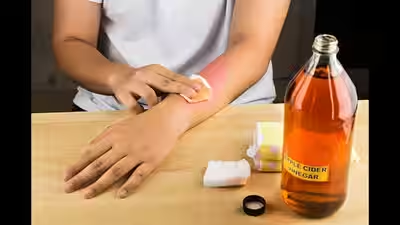

If you’ve ever searched for ways to get rid of a mole at home, chances are you’ve come across apple cider vinegar. It’s one of those remedies that keeps popping up online, with people claiming that applying ACV directly to a mole can make it dry out and eventually disappear.It sounds easy. It’s also not a good idea.Apple cider vinegar isn’t a safe way to remove a mole. In fact, putting it on your skin can leave you with a much bigger problem than the mole you were trying to get rid of.So, why do people use it?The thinking behind the remedy is fairly simple. Apple cider vinegar contains acetic acid, and because it’s acidic, people believe it can break down the tissue of a mole.But skin doesn’t work quite that neatly.Applying concentrated vinegar to a small area doesn’t mean it’ll only affect the mole. The surrounding skin can get irritated or burned too. With repeated applications, you could end up with redness, soreness, peeling, blistering or even a chemical burn.And there may be scarring or changes in skin colour afterwards.
There’s another reason to leave moles alone
The biggest concern isn’t just what vinegar can do to your skin.Most moles are harmless. But if one starts changing, it’s worth getting it checked rather than trying to make it disappear yourself.Pay attention if a mole becomes noticeably larger, changes shape or colour, starts bleeding, develops a crust or begins itching. A mole that looks very different from the others on your skin also deserves a closer look.That doesn’t automatically mean something is wrong. It simply means it’s better for a dermatologist to see it before you try to remove it.And once you’ve burned or damaged the area with vinegar, you’ve changed the appearance of the mole and the surrounding skin.
What could happen if you try it?
There isn’t a predictable way to know how your skin will react. Someone might develop mild irritation, while another person could end up with a painful burn.You could see redness, swelling, stinging, peeling or blisters. Once the skin heals, you may also be left with a dark or light patch or a scar.And despite all that irritation, the mole may still be there.
What should you do instead?
If you simply don’t like the look of a mole, there’s no need to live with it. A dermatologist can look at it first and tell you whether it should be removed and which method would be suitable.Depending on the mole, its size and where it is on the body, a doctor may remove it with a shave procedure or surgical excision. If there’s any medical concern, the removed tissue can also be examined.That’s very different from putting vinegar on it and hoping it falls off.
Already tried apple cider vinegar?
If you’ve already applied ACV, don’t keep putting more on the area. Don’t pick at the skin or try another DIY treatment either.If the area is badly painful, blistered or looks burned, it’s worth getting medical advice. And if the mole itself has changed recently, see a dermatologist rather than attempting to remove it at home.Apple cider vinegar might have a place in your kitchen, but mole removal isn’t one of its jobs. When it comes to moles, getting them checked before getting rid of them is the safer approach.